Ester Bron Onlyfan Full Content Media #836
Start Now ester bron onlyfan superior watching. Complimentary access on our viewing hub. Be enthralled by in a sprawling library of clips brought to you in top-notch resolution, a dream come true for choice watching enthusiasts. With the newest additions, you’ll always keep current. Discover ester bron onlyfan expertly chosen streaming in sharp visuals for a truly captivating experience. Be a member of our community today to see one-of-a-kind elite content with cost-free, no need to subscribe. Receive consistent updates and dive into a realm of distinctive producer content produced for premium media fans. Don’t miss out on exclusive clips—start your fast download! Enjoy the finest of ester bron onlyfan uncommon filmmaker media with breathtaking visuals and preferred content.
In chemistry, an ester is a compound derived from an acid (either organic or inorganic) in which the hydrogen atom (h) of at least one acidic hydroxyl group (−oh) of that acid is replaced by an organyl group (r ′) Importance in chemistry in chemistry, esters serve as key intermediates in numerous reactions. [1] these compounds contain a distinctive functional group.
15.6 Esters: Structures and Names | The Basics of General, Organic, and
Ester, any of a class of organic compounds that react with water to produce alcohols and organic or inorganic acids For example, ethyl acetate, commonly used as a solvent in nail polish removers, is an ester derived from ethanol and acetic acid Esters derived from carboxylic acids are the most common
Learn about the different types and reactions of esters and more in this article.
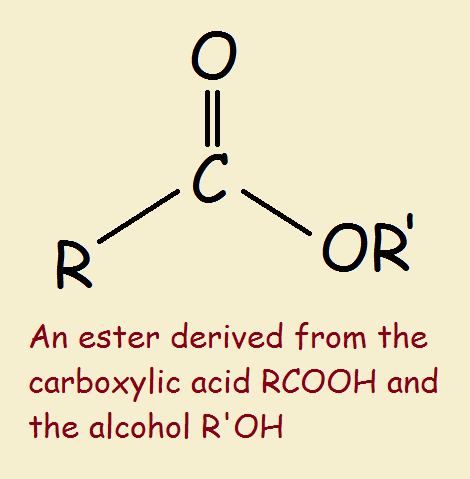
An ester is an organic compound where the hydrogen in the compound's carboxyl group is replaced with a hydrocarbon group Esters are derived from carboxylic acids and (usually) alcohol. Esters are widely found in fragrances, flavorings, fats, oils, and biological molecules, and they play key roles in condensation and hydrolysis reactions. The general structure of an ester is rcoor', where r and r' represent alkyl or aryl groups
Esters are derived from the condensation reaction between a carboxylic acid and an alcohol, resulting in the elimination of water. This could be an alkyl group like methyl or ethyl, or one containing a benzene ring like phenyl. This structure gives esters their unique properties